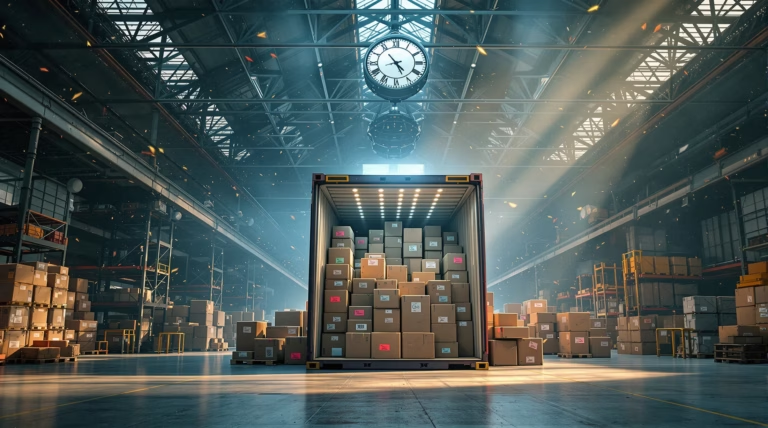
Navigating the complexities of international freight shipment is essential for businesses aiming to expand their global reach. This comprehensive guide explores the key aspects of global shipping, from understanding basic concepts to leveraging advanced logistics solutions for optimal results.
Understanding International Freight Shipment
International freight shipment forms the backbone of global commerce, facilitating the transportation of goods weighing over 150 lbs across national borders. With global trade exceeding $28 trillion annually, this sophisticated network involves multiple stakeholders working in concert to ensure seamless cargo movement.
What is International Freight Shipment?
International freight shipment encompasses the transportation of commercial goods across borders, handling diverse cargo from industrial equipment to consumer products. This specialized service requires:
- Proper documentation and customs compliance
- Strategic planning for cross-border logistics
- Coordination between exporters, importers, and regulatory authorities
- Management of geographical and political barriers
- Specialized handling for different cargo types
Types of Freight Services
| Service Type | Characteristics | Best Suited For |
|---|---|---|
| Air Freight | Fastest delivery, higher cost | Time-sensitive, high-value items |
| Ocean Freight | Cost-effective, handles 90% of world trade | Bulk shipments, container cargo |
| Road Freight | Flexible, continental coverage | Regional deliveries |
| Rail Freight | Balance of speed and cost | Long-distance continental transport |
Key Players in Global Shipping
The international freight ecosystem relies on specialized entities working together to facilitate global trade. This network enables the efficient movement of goods worth over $28 trillion annually through coordinated efforts of various stakeholders.
Major Logistics Companies
Global logistics is dominated by multinational corporations offering comprehensive shipping services:
- DHL – Operations in 220+ countries, specializing in express deliveries and supply chain solutions
- FedEx – Integrated transportation network focusing on time-definite deliveries
- Maersk – World’s largest container shipping company
- UPS – Extensive ground and air network
- DSV Panalpina – Comprehensive logistics solutions through strategic acquisitions
Role of Customs Brokers
Customs brokers serve as essential intermediaries in international shipping, providing:
- Expert navigation of customs regulations and tariff schedules
- Documentation preparation and submission
- Strategic guidance on harmonized tariff classifications
- Calculation and facilitation of duties and taxes
- Risk reduction in compliance matters
- Identification of duty-saving opportunities
International freight shipment relies heavily on successfully navigating the complex web of customs regulations that vary from country to country. These regulatory frameworks ensure that all traded goods comply with national laws regarding imports, exports, security, health, and safety. Understanding and adhering to these regulations is crucial for preventing costly delays, avoiding penalties, and maintaining smooth supply chain operations across borders.
Customs clearance represents one of the most critical points in the international shipping journey. On average, shipments face 20-30% of their total transit time at customs checkpoints. Businesses engaging in global trade must develop comprehensive strategies for customs management, including:
- Proper documentation preparation
- Understanding of tariff classifications
- Awareness of country-specific import restrictions
- Compliance with local regulations
- Management of duties and taxes
Understanding Customs Clearance
Customs clearance is the procedural process through which goods receive official permission to enter or exit a country. This critical step involves verification that all applicable duties and taxes have been paid and that the shipment complies with the importing country’s laws and regulations.
| Common Delay Causes | Prevention Strategies |
|---|---|
| Incomplete documentation | Thorough research of requirements |
| Improper tariff classification | Consultation with customs experts |
| Missing licenses/permits | Advanced permit acquisition |
| Regulatory holds | Participation in trusted trader programs |
Packaging and Shipping Guidelines
Proper packaging is essential for international freight shipments, particularly for cargo exceeding 150 lbs. With inadequate packaging responsible for approximately 65% of damage claims, adherence to industry guidelines becomes crucial for successful delivery.
- Use sturdy containers appropriate for cargo weight and dimensions
- Secure items within containers to prevent movement
- Provide adequate cushioning for fragile items
- Include clear international shipping symbols
- Comply with country-specific packaging regulations
- Follow hazardous materials packaging requirements when applicable
Tracking and Managing Shipments
Effective tracking and management systems form the backbone of modern international freight operations. Advanced tracking technologies now provide real-time location data, condition monitoring, and predictive analytics that help businesses anticipate and address potential disruptions. Companies implementing comprehensive tracking solutions reduce transit delays by up to 35% and improve customer satisfaction scores by 25%.
Freight Tracking Technologies
Modern freight tracking technologies offer unprecedented levels of transparency and control through multiple integrated systems:
- GPS and Cellular Networks – Real-time location tracking for land transportation
- RFID Tags – Digital checkpoints throughout the journey
- Satellite Tracking – Vessel monitoring across oceans
- IoT Sensors – Environmental condition monitoring (temperature, humidity, pressure)
- Blockchain Systems – Immutable shipment records
- Transportation Management Systems (TMS) – Integrated logistics management and analytics
Obtaining Rate Quotes
Modern digital platforms have revolutionized the process of securing competitive freight rates for international shipping. Today’s carriers and freight forwarders provide online quoting tools that deliver instant pricing based on specific shipment parameters. FedEx’s MyQuote system exemplifies this evolution, offering immediate spot quotes for U.S.-outbound air freight shipments over 250 lbs. These platforms enable simultaneous comparison of:
- Multiple service levels
- Transit time options
- Competitive pricing alternatives
- Available carrier capacity
- Seasonal rate variations
The transformation from traditional quote methods to digital solutions has significantly reduced processing times and enhanced accuracy. Modern systems integrate real-time market data and capacity information to generate precise estimates within minutes. For specialized shipments, providers maintain expert support through dedicated channels, such as FedEx’s Great Rates Hotline, offering guidance for complex or high-value cargo movements.
Sustainability and Innovations in Logistics
The logistics sector is experiencing a fundamental shift driven by sustainability requirements and technological advancement. Transportation currently accounts for 24% of global CO2 emissions from fuel combustion, prompting logistics providers to embrace environmentally conscious practices. This transition is reinforced by consumer behavior, with 73% of customers considering sustainability in their purchasing decisions.
Sustainability Initiatives
Major logistics companies are implementing comprehensive environmental programs. DHL’s GoGreen initiative, targeting zero emissions by 2050, demonstrates industry leadership through:
- Deployment of 15,000+ electric delivery vehicles
- Renewable energy adoption in facilities
- Route optimization programs
- Carbon offsetting strategies
- Packaging material reduction
- Implementation of circular economy principles
These sustainable practices deliver dual benefits – reducing operational costs by up to 15% while strengthening brand reputation in an environmentally conscious market.
Innovative Solutions for Evolving Needs
Advanced technologies are transforming logistics operations, with AI and machine learning leading the charge in optimization and efficiency. Companies report a 25% reduction in last-mile delivery costs through AI-powered routing systems alone.
| Technology | Impact |
|---|---|
| Blockchain | Reduces documentation errors causing 30% of delays |
| IoT Sensors | Real-time cargo condition monitoring |
| Autonomous Vehicles | Revolutionary last-mile delivery solutions |
| Predictive Analytics | Enhanced demand forecasting and routing |
Conclusion: The Future of International Freight Shipment
The international freight industry stands at a transformative crossroads, where technological advancement, sustainability requirements, and evolving market dynamics are reshaping global shipping operations. Organizations that effectively adapt to these changes will secure significant competitive advantages in an increasingly interconnected marketplace where efficient logistics serves as a strategic differentiator.
The next decade will witness rapid adoption of digital technologies transforming supply chain operations. Key technological developments include:
- Artificial Intelligence for predictive analytics and route optimization
- Blockchain solutions for enhanced transparency and documentation
- IoT systems for real-time cargo monitoring and tracking
- Automated customs processing platforms
- Smart warehousing solutions
Sustainability continues to drive innovation across the sector, with companies implementing various initiatives to reduce environmental impact:
| Initiative | Expected Impact |
|---|---|
| Alternative Fuels | Significant reduction in carbon emissions |
| Route Optimization | Lower fuel consumption and faster delivery times |
| Electric Vehicle Integration | Decreased last-mile delivery emissions |
| Smart Packaging Solutions | Reduced waste and improved cargo protection |
For businesses engaged in international trade, partnerships with experienced service providers remain essential. The complexity of modern global commerce demands expertise in customs clearance, documentation, and regulatory compliance to avoid costly delays and complications.
Success in future international freight operations will depend on organizational agility and innovation. Companies that embrace data-driven decision-making, sustainable practices, and flexible logistics networks will be best positioned to transform logistical challenges into competitive advantages in the global marketplace.